
Reducing PLC Cyber Risks by Redefining Connectivity
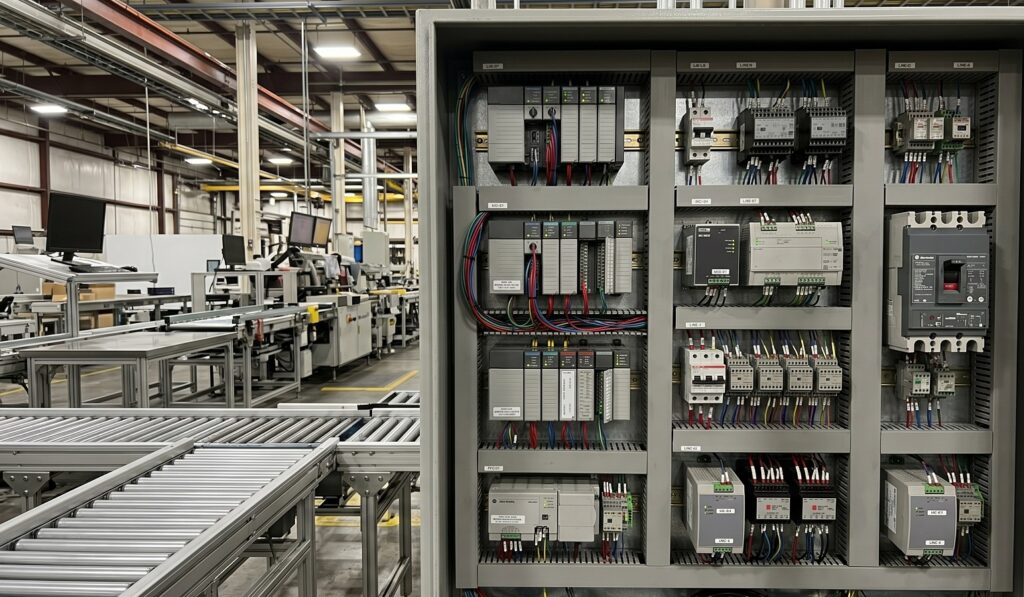
As geopolitical tensions increasingly extend into cyber operations targeting critical infrastructure, recent attacks against internet-exposed PLCs in U.S. critical infrastructure environments have again highlighted a problem the OT industry has discussed for years, but still struggles to eliminate in practice: control systems that remain reachable from outside the operational network.
According to the joint advisory issued by U.S. cybersecurity and energy agencies, attackers were able to access exposed devices, interact with SCADA and HMI environments, and in some cases disrupt operations and cause financial impact.
Notably, these incidents did not rely on highly advanced malware or zero-day vulnerabilities. In several cases, attackers were able to interact with systems using standard industrial protocols and legitimate engineering tools once network access was available. Exposure itself has become the primary weakness.
The Architectural Gap
Most industrial environments already deploy firewalls, VPNs, segmentation rules, and access controls. The issue is not that these protections are ineffective. The issue is that they still depend on permitting some level of bidirectional communication.
In many facilities, remote engineering access, vendor maintenance, centralized monitoring, or historian integration all require traffic to move both ways. Once that path exists, the environment becomes dependent on configuration accuracy, patch management, credential security, and ongoing monitoring.
That creates a difficult operational balance. Systems must remain accessible enough to support operations, but restricted enough to prevent unintended access.
The advisory’s repeated emphasis on removing direct exposure points to a deeper architectural question:
Should all connections be allowed in both directions by design?
Unidirectional Design as a Control Boundary
For many industrial use cases, the answer is increasingly “no.” The need to transmit operational data outward does not inherently require inbound control traffic from those same external systems. In these cases, a unidirectional architecture changes the security model entirely. Rather than inspecting or filtering incoming traffic, the design prevents return communication at the physical level.
In many substations, operational data still needs to be shared with centralized monitoring systems while maintaining strict separation from external engineering networks. Deploying unidirectional communication in practice still requires industrial protocols and operational workflows to function normally. Monitoring systems, historians, and analytics platforms must continue receiving timely and usable data without introducing reverse connectivity paths.
Solutions such as the BlackBear intelligent gateway are designed around this requirement, combining hardware-enforced one-way transfer with protocol-aware handling for industrial communications.
Unlike purely software-based solutions, this model does not depend on rules or updates to maintain separation. The boundary is enforced by design.
Security Built Into the Design Process
In OT environments, security controls often remain in service for far longer than typical IT systems. Devices may operate for years with limited maintenance windows, infrequent upgrades, and strict availability requirements. That makes simplicity and predictability important design considerations. Security mechanisms that depend heavily on ongoing rule changes, frequent updates, or complex policy management can become difficult to maintain consistently over time.
The BlackBear intelligent gateway is designed with this operational reality in mind, emphasizing fixed communication boundaries and reduced dependency on continuously tuned security policies.
In many OT incidents, the root issue is not a sophisticated exploit. It is the existence of a communication path that was never intended to carry external influence in the first place. Once critical control systems are reachable, organizations become dependent on maintaining perfect configurations, policies, and access controls over long operational lifecycles. Unidirectional architectures approach the problem differently, by reducing the number of trusted pathways altogether.